
- Why Graciosa is a UNESCO Biosphere Reserve and what that means for visitors
- How to visit the Furna do Enxofre and the Caldeira safely
- Where to relax at the Termas do Carapacho and what to expect
- Practical tips on getting there, getting around and how long to stay
General, independent information, not legal or tax advice. Rules and amounts change: confirm with the official sources at the end of the page.
Why Graciosa is special
Graciosa is the northernmost of the five central Azores islands, a small, gently rolling place of basalt walls, hydrangea hedges and whitewashed villages. In 2007, UNESCO designated the entire island as a Biosphere Reserve, recognising the balance between people and nature that has shaped it for centuries.
The island's name means 'gracious', and it lives up to it: life moves slowly, roads are quiet, and the landscapes are soft rather than dramatic. Don't expect adrenaline-pumping adventures; come for the calm, the geology and the sense of stepping back in time.
Furna do Enxofre: inside a volcanic cave
The Furna do Enxofre is one of the Azores' most impressive volcanic caves, a huge lava tube with a domed ceiling and an underground lake. You reach it via a spiral staircase inside a tower built into the caldera floor. The air is cool and sulphur-scented, and the acoustics are eerie.
Visits are self-guided during opening hours, but check locally for current access conditions and any entry fee. The stairs are steep and can be slippery; wear sturdy shoes and bring a light jacket.
You need a guided tour to enter the Furna do Enxofre.
In practice, access is often self-guided during set hours, though guides may be available. Always confirm locally, as arrangements can change.
The Caldeira and surrounding landscapes
The Caldeira is a large volcanic crater now covered in lush vegetation, with the Furna do Enxofre at its centre. You can drive to the rim and peer down, or walk into the crater for a closer look. The viewpoint offers sweeping views over the island and the sea beyond.
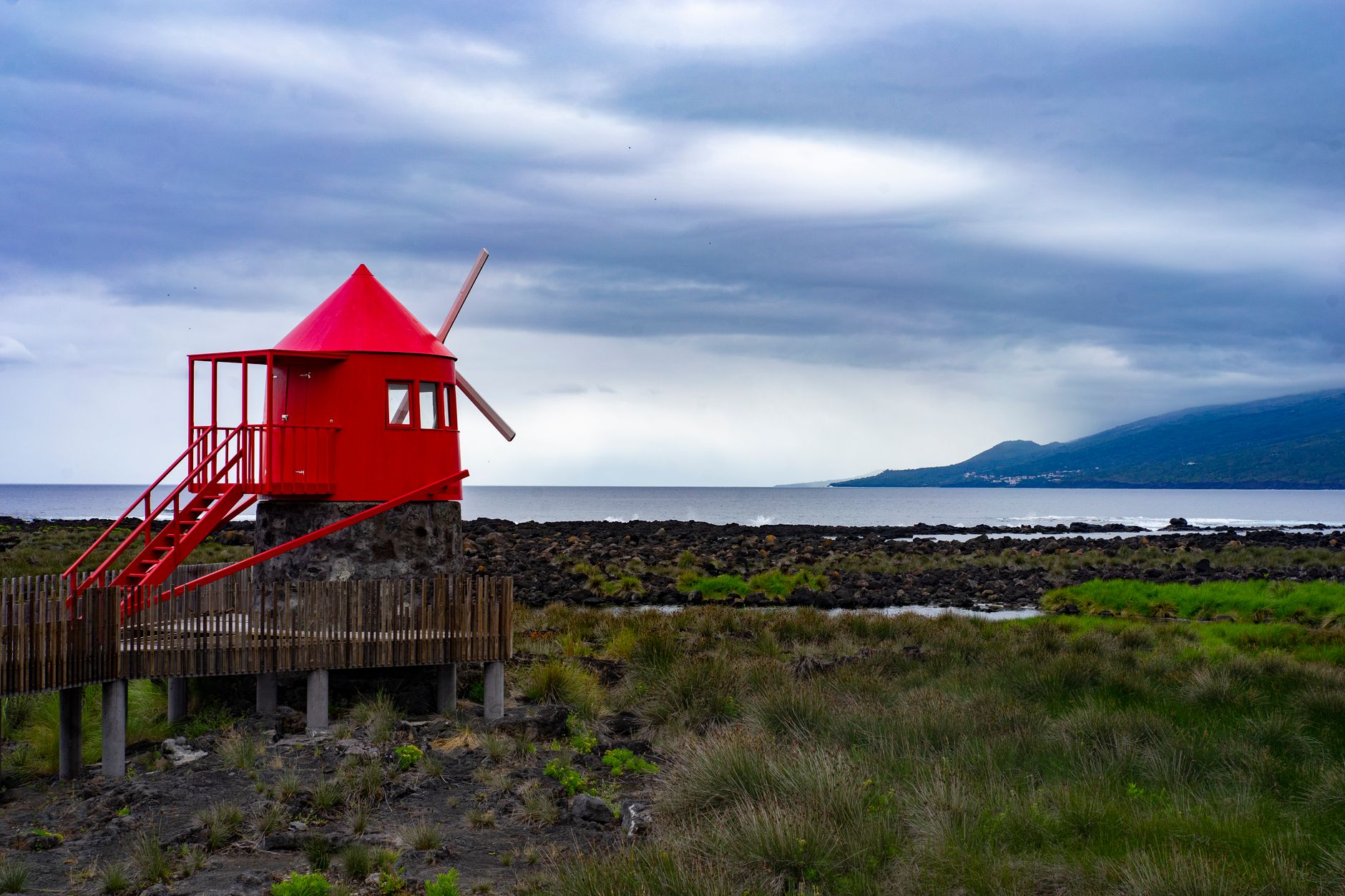
Around the caldera, the landscape is dotted with traditional windmills, some restored and others in ruins. These windmills, with their wooden sails, are a symbol of Graciosa's agricultural past and make for photogenic stops along the rural roads.
- Walk the crater rim for panoramic views (easy trail).
- Look for the windmills near the village of Praia.
- Bring a picnic — there are few facilities in the interior.
Termas do Carapacho: thermal relaxation
On the southeast coast, the Termas do Carapacho are natural thermal pools fed by sulphur-rich springs, long believed to have healing properties. The modern facility includes indoor and outdoor pools, and the setting is peaceful, with views over the sea to the islet of Praia.
The water is warm (around 40°C), and the experience is simple: soak, relax and enjoy the coastal scenery. Check opening hours and prices on site, as they vary by season.
Santa Cruz and local life
Santa Cruz, the island's main town, is a charming base with a pretty harbour, a historic church and a few restaurants serving local seafood and wine. The town's laid-back atmosphere is typical of Graciosa: no rush, no crowds.
Graciosa produces a small amount of wine, and you may find local bottles in restaurants or shops. The vineyards are tiny and often mixed with other crops, but the wine is worth trying if you're curious about Azorean flavours.
Graciosa doesn't shout; it whispers its beauty to those who slow down enough to listen.
Getting there and getting around
Graciosa has a small airport (Aeródromo da Graciosa) with scheduled flights from other Azorean islands, typically Terceira, São Miguel, Faial and Pico. Flight schedules and fares vary; check with Azores Airlines or SATA for current options.
There is also a seasonal ferry connection, but it's less frequent and more weather-dependent. Once on the island, renting a car is the most practical way to explore, though taxis and limited bus services exist.
- Book your flight early, especially in summer.
- Arrange car rental in advance — supply is limited.
- Download offline maps; mobile signal can be patchy in rural areas.
- Check ferry schedules if you plan to island-hop by sea.
| Transport | Pros | Cons |
|---|---|---|
| Rental car | Freedom to explore at your own pace | Limited availability; book ahead |
| Taxi | Easy for short trips | Can be expensive for full-day tours |
| Bus | Cheap | Infrequent; limited routes |
| Bicycle | Great for short distances | Hilly terrain; weather-dependent |
How long should you stay?
For most visitors, two to three days are enough to see the main sights: the Furna do Enxofre, the Caldeira, the Termas do Carapacho and Santa Cruz. If you want to hike, cycle or simply unwind, add an extra day.
Graciosa is also a good place to experience the Azores without the crowds. If you're island-hopping, it pairs well with Terceira or Faial, but allow for flight connections and weather delays.
Frequently asked questions
Do I need a car to explore Graciosa?
It's highly recommended. Public transport is limited, and a car gives you the freedom to visit the caldera, thermal baths and villages at your own pace. Book in advance, especially in summer.
Is the Furna do Enxofre suitable for children?
Older children who are steady on their feet can manage the stairs, but the cave is dark and enclosed. Keep them close and consider whether the steep descent is appropriate for your family.
What should I pack for Graciosa?
Bring layers, a waterproof jacket, sturdy walking shoes and swimwear for the thermal pools. Even in summer, the weather can change quickly.
Are there good restaurants on the island?
Yes, Santa Cruz and Carapacho have a handful of restaurants serving fresh fish and local dishes. Options are limited, so check opening hours and don't expect late-night dining.
Can I visit Graciosa as a day trip?
It's possible from Terceira if flights align, but you'll see only a fraction of the island. Staying at least one night is far more rewarding.
Is Graciosa expensive?
Prices are moderate for the Azores. Accommodation and car rental can add up, but food and activities are generally reasonable. Confirm current prices locally.
Graciosa is the Azores at their most peaceful: a UNESCO Biosphere Reserve where you can explore volcanic caves, soak in thermal waters and cycle past windmills without the crowds. Give it two or three days, rent a car and let the island's gentle pace work its magic.