
- How the main Azorean hot springs differ from each other
- Practical rules: no soap, no food, watch the water colour
- When to go and whether you need to book ahead
- Safety and etiquette for ocean-heated pools like Ferraria
General, independent information, not legal or tax advice. Rules and amounts change: confirm with the official sources at the end of the page.
Why the Azores have hot springs at all
The archipelago sits on volcanic ground, so rainwater and seawater get heated underground and rise back up as hot springs. That is why the water often smells of sulphur and looks cloudy or rusty.
Each site is different. Some are developed thermal pools with changing rooms; others are natural rock pools where the experience depends on weather and tide. Read the specific site before you go, because expectations set at one place rarely transfer to another.
All Azorean hot springs are the same kind of spa experience.
They range from landscaped garden pools to raw volcanic rock baths and an ocean cove warmed by volcanic vents. Facilities, safety and fees differ a lot.
The main sites, briefly
Terra Nostra (Furnas, São Miguel) is the classic: a large thermal pool set in a historic botanical garden, with the famous reddish-brown iron-rich water. It is the most developed and most visited, so timing matters.
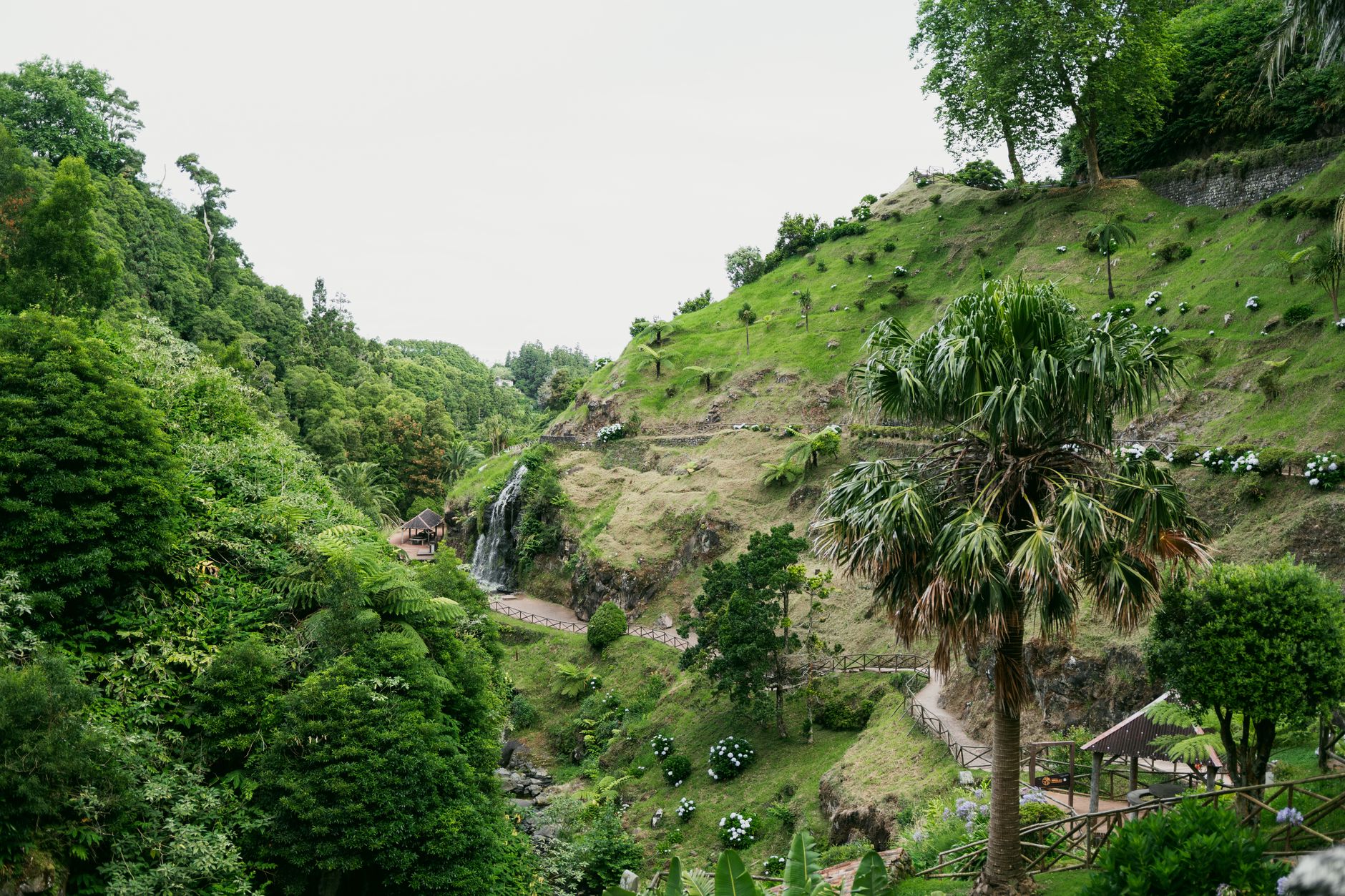
Poça da Dona Beija (Furnas) is a set of smaller thermal pools along a stream, popular for evening soaks. Caldeira Velha (Ribeira Grande) combines thermal pools with lush forest and a small waterfall, and is often busy in summer.
Ponta da Ferraria (São Miguel) is different: a natural ocean pool heated by volcanic vents, where the water temperature depends heavily on the tide and swell. Carapacho (Graciosa) is a developed thermal bath complex on a quieter island.
| Site | Island | Character |
|---|---|---|
| Terra Nostra | São Miguel | Large garden thermal pool, developed |
| Poça da Dona Beija | São Miguel | Smaller pools, popular in the evening |
| Caldeira Velha | São Miguel | Forest pools and waterfall |
| Ponta da Ferraria | São Miguel | Ocean pool heated by vents, tide-dependent |
| Carapacho | Graciosa | Thermal bath complex, quieter |
What to bring and how to behave
- Swimwear and a towel — rentals are limited or unavailable at some sites
- Flip-flops or water shoes, especially for rocky pools
- A plastic bag for wet clothes
- Drinking water, since hot water dehydrates you
- Cash as a backup, though many sites now take cards
- A hair tie and old swimwear if you care about the iron staining light fabrics
Shower before entering and never use soap, shampoo or sunscreen in the pools. These are natural waters and the rules exist to protect them — and other bathers.
Timing, bookings and fees
Early morning and late afternoon are usually calmer and cooler for soaking. Midday in summer brings tour groups, especially at Furnas and Caldeira Velha.
Several sites now use timed entry or online booking in high season, and some limit how long you can stay. Check the official page for the specific site before you travel, as policies change.
Entry fees vary by site and are not the same everywhere. Rather than quote a number here, treat the fee as something to confirm on the official website or at the gate — and note that some sites charge separately for parking or lockers.
Safety, especially at Ferraria
At Ponta da Ferraria the water is only comfortably warm near low tide, when the heated flow mixes with the ocean. At other times it can be cold, rough or unsafe.
- Check the tide table before you go — low tide is generally the window
- Look at the swell and ask locally if unsure
- Use the access path and handrails; the rocks are slippery
- Never go alone in rough conditions, and supervise children closely
- Rinse off afterwards — it is seawater mixed with volcanic minerals
The colour of the water tells you what the volcano left in it — iron, sulphur, minerals — not how clean it is.
Health notes and who should be careful
Hot water is not for everyone. If you are pregnant, have heart or blood-pressure conditions, or are prone to dizziness, ask a doctor before soaking — this is general information, not medical advice.
Stay hydrated, don't stay in too long, and get out if you feel lightheaded. Children and older visitors should take it slowly, especially in the hotter pools.
Hot springs are a cure-all for aches and skin problems.
Many people find them relaxing and soothing, but they are not a medical treatment. Claims about healing should be treated with caution.
Frequently asked questions
Do I need to book Azores hot springs in advance?
Some popular sites use timed entry or online booking in high season. Check the official page for each site, as policies change year to year.
Why is the water brown or cloudy?
Iron and other volcanic minerals. It is normal, but it can stain light swimwear and jewellery, so dress accordingly.
When is the best time to visit Ponta da Ferraria?
Generally around low tide, when the heated water mixes with the ocean. Check the tide table and sea conditions, and skip it if it looks rough.
Are the pools suitable for children?
Many are, but the water can be hot and rocks slippery. Supervise closely and keep soaks short.
Can I use sunscreen or soap in the pools?
No. Shower before entering and avoid soap, shampoo and sunscreen in the water — the rules protect the springs and other bathers.
Are the entry fees expensive?
Fees vary by site and change over time. Confirm the current price on the official website or at the gate rather than relying on older guides.
The Azores' hot springs are one of the islands' most distinctive experiences, but they reward a little preparation. Pick your site for the right reasons, bring the basics, respect the water, and check tides, bookings and fees before you go. Do that, and a soak becomes a highlight rather than a hassle.