
- How the Mount Pico climb works and what to prepare for
- Why the vineyard landscape is protected and how to visit it
- Where to taste Pico wine and what to expect
- A realistic one- to three-day route around the island
General, independent information, not legal or tax advice. Rules and amounts change: confirm with the official sources at the end of the page.
Mount Pico: the climb
Mount Pico is Portugal's highest point, and the summit climb is the reason many people come. It is a serious mountain walk on loose volcanic rock, not a casual stroll, and weather can change fast.
Ascent is only allowed with a licensed guide, and booking in advance is required. Rules, group sizes and where you register are managed locally, so confirm the current procedure with the official mountain guidance or your accommodation before you travel.
- Book your guided climb before arrival, especially in summer
- Check the weather forecast and ask locally about conditions
- Bring sturdy boots, layers, water, food, sun protection and a headlamp
- Start early; the mountain often clouds over later in the day
- Descend with your guide and sign out as instructed
You can just show up and climb Mount Pico on your own.
A licensed guide is required, and slots can fill up. Plan and book ahead, and confirm the current rules before your trip.
The UNESCO vineyard landscape
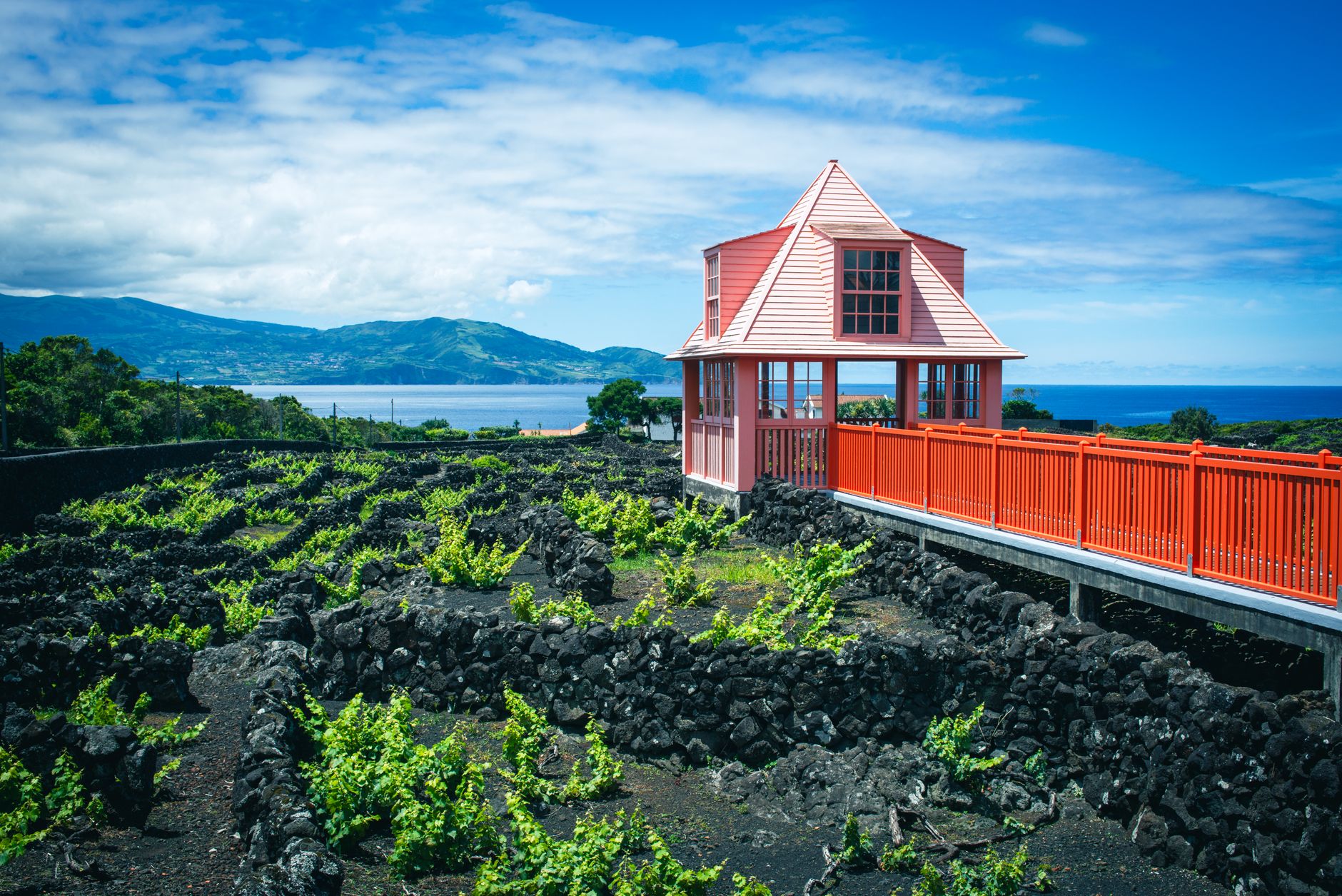
Pico's wine culture is written into the landscape. The Paisagem da Cultura da Vinha, the vineyard landscape of Pico, is a UNESCO World Heritage cultural landscape, recognised for the extraordinary black stone walls built to protect vines from wind and salt spray.
The walls, called currais, form a striking patchwork along the coast. Walking among them is one of the island's defining experiences, and it explains why Pico wine has such a distinct story.
Pico wine: what to taste
Pico's vineyards survive in tough coastal conditions, and the wines reflect that. Local producers make whites and other styles that are increasingly respected in Portugal and abroad.
You can visit wineries and tasting rooms, especially near Madalena and the vineyard landscape. Opening hours, tour availability and tasting fees vary by producer, so check directly or ask your accommodation to arrange a visit.
| Experience | Where | Good to know |
|---|---|---|
| Vineyard landscape walk | Criação Velha / Madalena area | Free to walk; respect private property and walls |
| Wine tasting | Local producers near Madalena | Book ahead; fees and hours vary |
| Whale watching | Lajes do Pico and other ports | Seasonal; sea conditions matter |
| Whaling history | Lajes do Pico museum | Check opening hours locally |
Whales and the whaling story
Pico is one of the best places in the Azores for whale and dolphin watching. Trips leave from several ports, and sightings depend on season, weather and luck; no operator can guarantee a specific animal.
The island's whaling past is part of its identity. The Museu dos Baleeiros in Lajes do Pico tells that story through boats, tools and photographs. It is a sobering and worthwhile stop, and opening hours should be confirmed locally.
Madalena, Lajes and getting around
Madalena is the main gateway, with the ferry link to Faial and most visitor services. Lajes do Pico, on the south coast, is quieter and holds the whaling museum.
Distances are short but roads are winding, and a rental car makes the island much easier to explore. Book vehicles early in peak season, and confirm ferry and flight schedules with the operators.
- Fly into Pico or arrive by ferry, often via Faial; confirm schedules
- Base yourself in Madalena for convenience or Lajes for a slower pace
- Allow at least two full days, more if you plan the mountain climb
- Keep plans flexible for weather
A simple route
A practical plan works around the weather and your energy. Use this as a starting point, not a fixed schedule.
- Day 1: arrive in Madalena, walk the vineyard landscape, taste local wine
- Day 2: guided Mount Pico climb if conditions allow, or a coastal walk and whale watching
- Day 3: Lajes do Pico and the whaling museum, then a slow drive back
On Pico, the mountain sets the schedule, and the weather decides the rest.
You can see everything on Pico in a day.
The island rewards a slower pace. The climb alone takes most of a day, and weather can reshuffle plans.
Frequently asked questions
Do I need a guide to climb Mount Pico?
Yes, ascent is only allowed with a licensed guide, and booking ahead is required. Confirm the current rules and meeting points locally before you travel.
How long does the Mount Pico climb take?
It is a long day out, often most of the day depending on pace and conditions. Ask your guide for a realistic estimate and start early.
When is the best time to visit Pico?
Late spring to early autumn is generally more reliable for hiking and boat trips, but weather is variable year-round. Check forecasts and book flexibly.
Can I visit the vineyards for free?
Walking the vineyard landscape is generally open, but respect private property and stay on paths. Tastings and winery visits usually need booking and may have fees.
Where can I see whales?
Trips run from several ports, including Lajes do Pico. Sightings depend on season and sea conditions, so choose a licensed operator and keep expectations realistic.
How do I get to Pico?
By plane or ferry, often connecting through Faial or other islands. Schedules change, so confirm with the airline or ferry operator before booking.
Pico rewards planning: book the guided mountain climb early, keep a buffer day for weather, and give the vineyards and whaling history real time. Confirm current rules, schedules and opening hours with official sources, and let the island set its own pace.